Parkin Recipe
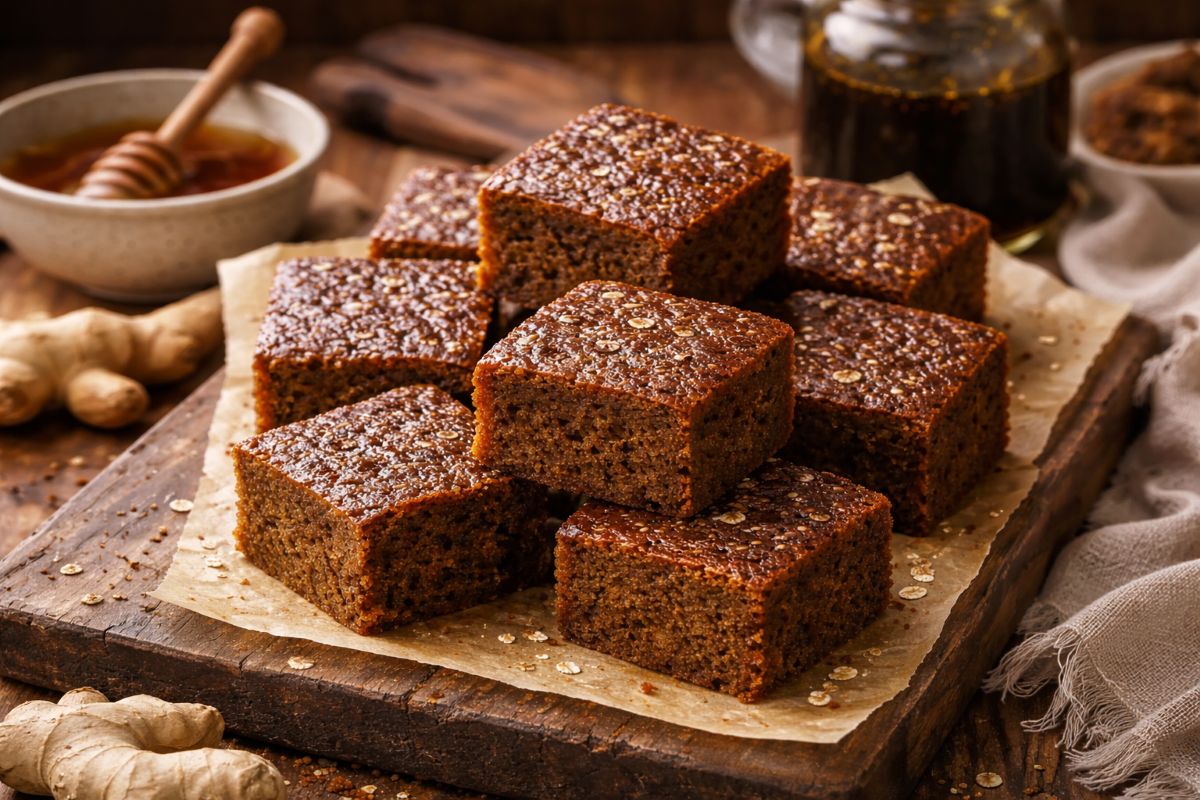
Traditional pudding recipe seekers looking for an authentic Northern bake will adore this Yorkshire parkin. Dark, moist, and warmly spiced, it’s the kind of comforting teatime treat that tastes even better after it’s had time to rest.
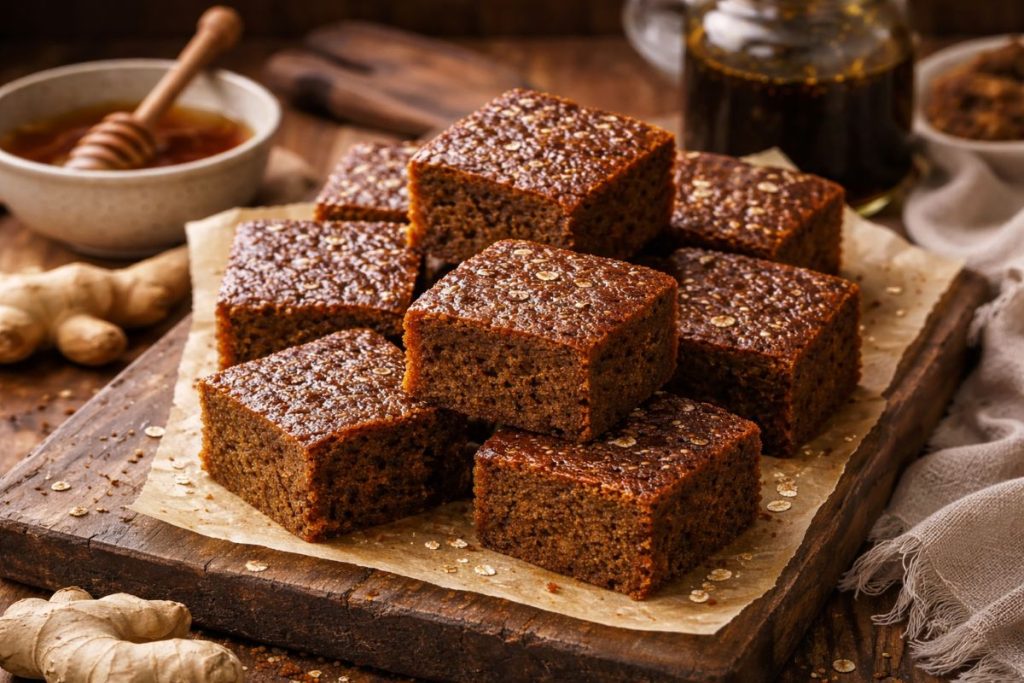
Yorkshire parkin is a traditional Northern English bake strongly associated with Yorkshire and famously enjoyed on Bonfire Night (5th November). It’s known for its sticky texture, deep flavour from black treacle, and gentle warmth from ground ginger.
Unlike sponge cakes, parkin actually improves with time. Once baked, it’s traditionally wrapped and stored for a few days to allow the flavours to develop and the texture to become even stickier. That resting period is part of what makes it so distinctive.
What makes this Parkin recipe the best Traditional Pudding Recipe on the internet?
- Uses classic Yorkshire ingredients: black treacle, oats, ginger, and dark sugar
- Proper slow bake at a low temperature for the correct sticky texture
- No unnecessary extras — just authentic, traditional components
- Resting method included (the traditional way)
- Deep, rich flavour without being overly sweet
- Simple method using basic pantry staples
Ingredients
- 4 oz butter
- 6 oz black treacle
- 150 ml milk
- 6 oz self-raising flour
- 6 oz oats
- 4 oz dark muscovado sugar
- 2 teaspoons ground ginger
- 1 egg, beaten
How to make Homemade Parkin recipe
Preheat your oven to 140°C (fan) or 160°C conventional. Line a baking tin with parchment paper.
In a saucepan over medium heat, add the butter, black treacle, and milk. Stir occasionally until the butter has melted and everything is fully combined. Remove from heat and set aside to cool slightly.
In a large mixing bowl, add the self-raising flour, oats, dark muscovado sugar, and ground ginger. Mix together thoroughly.
Pour the melted treacle mixture into the dry ingredients. Add the beaten egg.
Mix everything together with a fork (or spoon) until fully combined. The mixture will be quite thick.
Pour the batter into your lined baking tin and smooth the top.
Bake for approximately 1 hour, or until the centre feels just firm to the touch.
Allow the parkin to cool in the tin for 15 minutes before transferring to a wire rack to cool completely.
For traditional texture, wrap the cooled parkin in parchment paper and store for a few days before slicing. This allows moisture to redistribute and the cake to become properly sticky.
How to serve Parkin
Yorkshire parkin is traditionally served sliced into squares with a hot cup of tea.
It pairs beautifully with:
- A spread of butter on a thick slice
- Custard, served warm
- A dollop of cream
- A simple cup of strong black tea
Some people gently warm a slice before serving to enhance the treacle flavour and soften the texture even more.
Storage Tips
- Wrap the fully cooled parkin tightly in parchment paper and then foil.
- Store in an airtight container at room temperature.
- It keeps well for several days and actually improves after 2–3 days.
- Because of the treacle and sugar content, it stays moist longer than many cakes.
Parkin Recipe
Ingredients
Method
- Preheat your oven to 140°C (fan) or 160°C conventional. Line a baking tin with parchment paper.
- In a saucepan over medium heat, add the butter, black treacle, and milk. Stir occasionally until the butter has melted and everything is fully combined. Remove from heat and set aside to cool slightly.
- In a large mixing bowl, add the self-raising flour, oats, dark muscovado sugar, and ground ginger. Mix together thoroughly.
- Pour the melted treacle mixture into the dry ingredients. Add the beaten egg.
- Mix everything together with a fork (or spoon) until fully combined. The mixture will be quite thick.
- Pour the batter into your lined baking tin and smooth the top.
- Bake for approximately 1 hour, or until the centre feels just firm to the touch.
- Allow the parkin to cool in the tin for 15 minutes before transferring to a wire rack to cool completely.
- For traditional texture, wrap the cooled parkin in parchment paper and store for a few days before slicing. This allows moisture to redistribute and the cake to become properly sticky.